
The Best Circular Saw for Plywood: Your Guide to Glass-Smooth Cuts
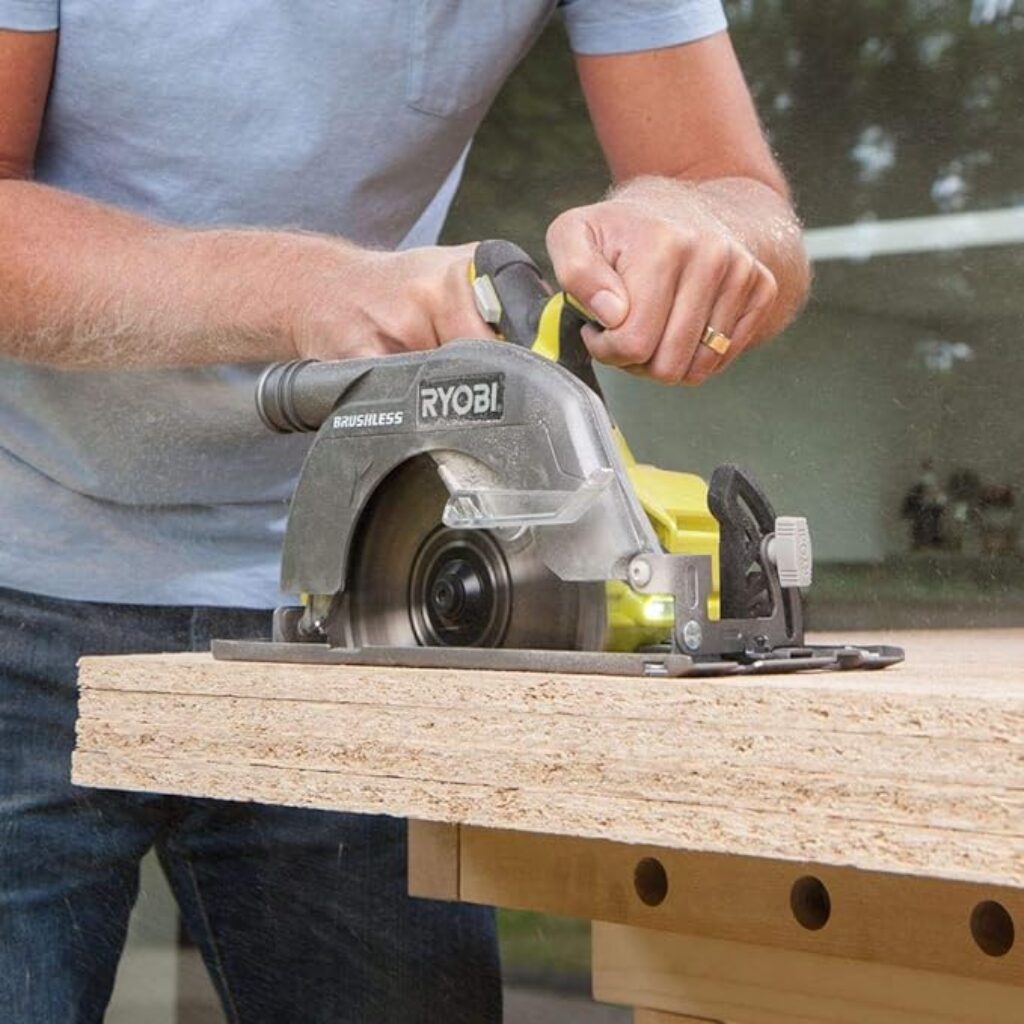
Why Plywood Needs a Specialized Circular Saw
You’re standing in your workshop, ready to transform a pristine sheet of plywood into your next masterpiece.
But as you fire up your saw, instead of the satisfying whisper of a clean cut, you’re met with the heart-sinking sound of splintering wood and ragged edges that look like they’ve been gnawed by an angry beaver.
The truth? Not all circular saws are created equal when it comes to plywood’s delicate, layered personality.
What Makes Plywood Different (And Why Your Saw Should Care)
Plywood isn’t just wood—it’s an engineered symphony of alternating grain layers, each one waiting to splinter if you approach it wrong. Those beautiful, smooth faces can turn into a craftsperson’s nightmare faster than you can say “tear-out.”
The Anatomy of the Perfect Circular saw for cutting plywood
- Blade Precision: The Heart of Clean Cuts
- Tooth Count Sweet Spot: 60-80 teeth minimum, think of each tooth as a tiny craftsman making microscopic cuts instead of aggressive gouges.
- Blade Quality: Carbide-tipped teeth that stay razor-sharp through countless cuts, slicing through plywood’s alternating grain like a hot knife through butter.
- Power That Whispers, Not Roars. The best plywood saws deliver consistent, controlled power, enough torque to maintain blade speed through dense hardwood plies without the brutal force that causes blow-out on delicate face veneers.
Precision Controls for Surgical Accuracy
– Depth adjustment that locks solid as granite
– Bevel capacity for those perfect 45-degree miters
– Base plate stability that glides like silk across your material
Top Circular Saws for Cutting Plywood Without Splintering
- For the Weekend Warrior:
Look for saws with “laser guides” and “dust collection” features that transform guesswork into precision.
- For the Daily Professional:
Worm-drive models offer the sustained power and durability to handle sheet after sheet without missing a beat.
Choosing the Right Blade for Plywood Projects:
The best circular saw for plywood isn’t just about raw power, it’s about “finesse, precision, and respect for the material”.
When you find the right match, every cut becomes a moment of quiet satisfaction, leaving edges so clean they barely need sanding.
Your plywood projects deserve better than torn-out edges and frustrated do-overs.
Choose wisely, and let your craftsmanship shine.
Top Circular Saws for Cutting Plywood
| Brand | Model | Why It’s Good for Plywood | ||
|---|---|---|---|---|
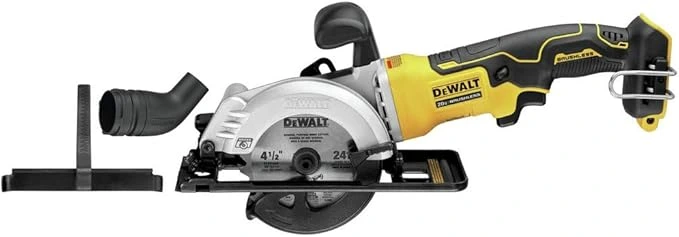 |
DeWalt | ATOMIC 20V MAX 4‑1/2″ (DCS571B) | Compact but strong, good depth for thinner plywood | View on Amazon |
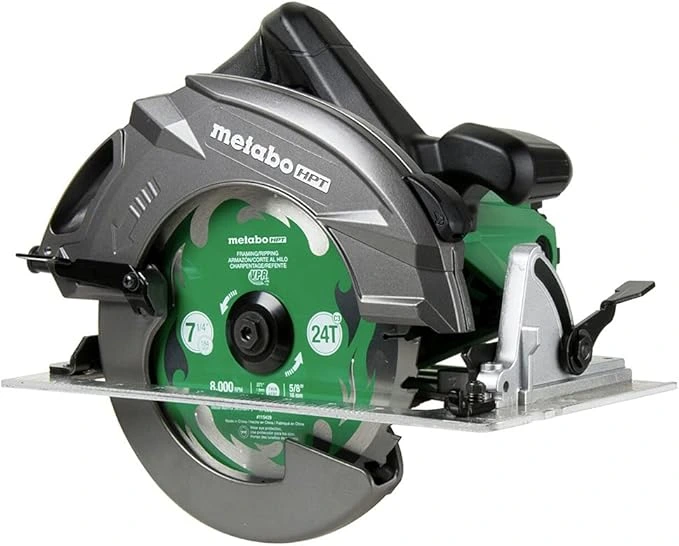 |
Metabo HPT | RipMax 7‑1/4″ Corded (C7UR) | Powerful 15‑amp motor, 6800 RPM, all‑metal body | View on Amazon |
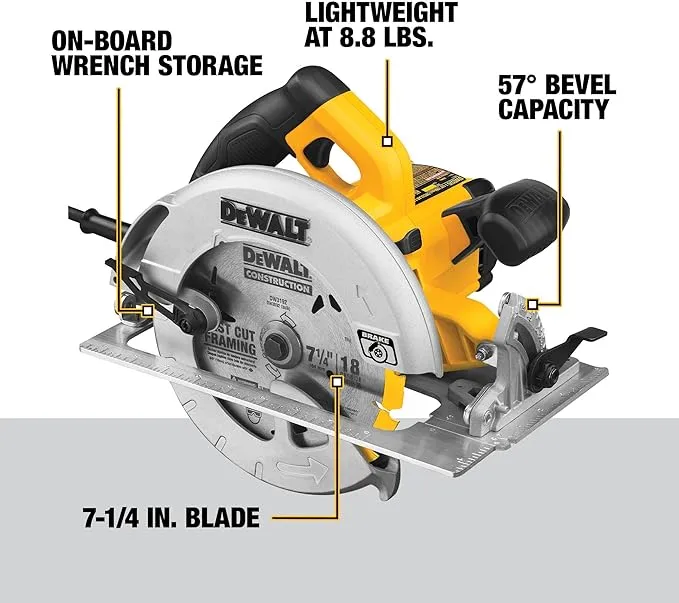 |
DeWalt | 7‑1/4″ Lightweight Corded (DWE575SB) | High cut depth, good bevel range, reliable power | View on Amazon |
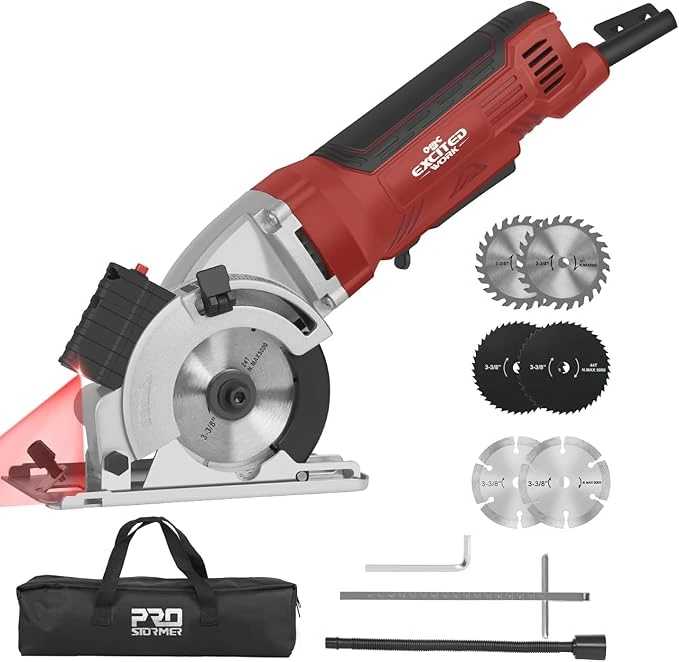 |
Excited Work | 4.5‑Amp Compact 3‑3/8″ | Lightweight, good RPM, ideal for small plywood cuts | View on Amazon |
Frequently Asked Questions About Circular Saws for Plywood
Can I use any circular saw to cut plywood?
Not all circular saws are ideal for plywood. While most can technically make the cut, models with higher RPM, stable base plates, and fine-tooth blades (60–80 teeth) are better suited for clean, splinter-free results.
What type of blade is best for cutting plywood?
Use a carbide-tipped blade with a high tooth count—typically 60 to 80 teeth for a 7¼” blade. These blades make smoother cuts and reduce tear-out on the plywood’s surface veneer.
Should I go for a corded or cordless circular saw?
Corded saws offer consistent power, making them ideal for long sessions or thick plywood. Cordless saws are more portable and convenient for quick cuts or job sites without easy access to power.
How do I avoid splintering when cutting plywood?
- Use painter’s tape along the cut line to reduce tear-out
- Cut with the good side facing down (for standard blades)
- Use a zero-clearance insert or a sacrificial board underneath
- Go slow and steady—let the blade do the work
What’s the ideal depth setting for cutting plywood?
Set the blade depth about 1/8 inch deeper than the plywood’s thickness. This ensures a clean cut without overexposing the blade, which can reduce control and increase tear-out.
How do I keep my cuts straight?
Use a rip fence, guide rail, or a clamped straightedge. Many modern circular saws also come with laser guides or track systems for added precision.
